Contour Pillow vs. Regular Pillow: Which Fits Your Sleep Style?
You lie down, close your eyes, and try to get comfortable. A few minutes later, you’re folding your pillow, pressing it into shape, or flipping it over again.
It’s a small thing, but it gets frustrating. If you keep adjusting your pillow, softness may not be the only thing worth comparing. The pillow’s shape and how much it changes while you use it can make a real difference to how it feels.
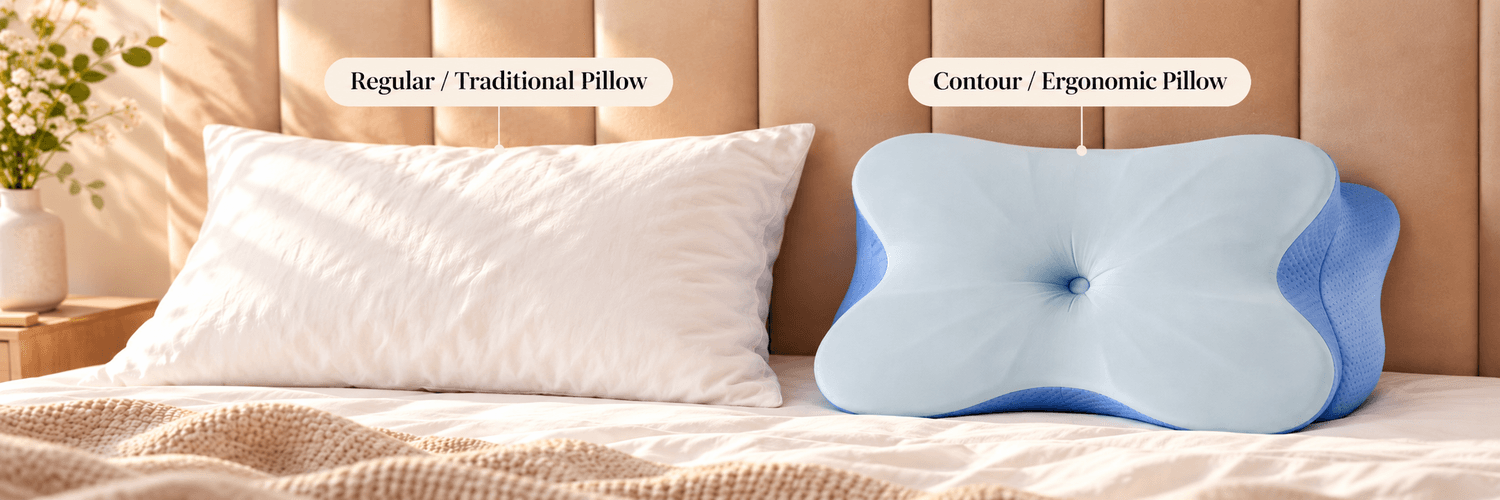
That’s where regular and contoured pillows differ. A regular pillow gives you more freedom to fluff and reshape it. A contoured pillow starts with higher and lower areas already built into the design.
RoomCasa is an independent home-comfort publisher. We may earn a commission if you purchase through links on this page, at no extra cost to you. We do not manufacture or sell the featured product.
A regular pillow may suit you better if you value a flexible shape that you can adjust and reshape. A contoured pillow may be worth considering if you prefer a more defined shape with higher and lower areas already built in. Neither design is automatically better. The better choice depends on the specific pillow and your preferences.
The Main Difference Is Built-In Shape
Most traditional pillows start with a relatively even shape. Depending on the filling, they can usually be adjusted, compressed or repositioned until the pillow feels comfortable to you.
Contoured pillows are different because more of the shape is decided in advance.
Many designs have raised edges and a lower central area. Others include different edge heights or additional shaping around the sides.
The practical difference is simple: with a traditional pillow, you create more of the shape yourself. With a contoured design, much of that shape is already there.

Overall shape: Usually even or softly rounded
Feel: Often more flexible
Height: Can change as filling moves or compresses
Adjustment: Commonly reshaped or repositioned
May appeal to you if: You value flexibility

Overall shape: Pre-shaped with defined areas
Feel: Usually more structured
Height: Often has more defined height areas
Adjustment: Generally follows its built-in profile
May appeal to you if: You prefer a more consistent shape
Who Might Prefer a Contoured Pillow?
A contoured design may appeal to you if you prefer knowing where the higher and lower areas of your pillow will be rather than creating those areas yourself.
Some models offer two different edge heights. Others use a lower central section or additional shaping around the sides. There isn't one universal contour, so the actual design matters.
The word ergonomic alone doesn't tell you whether a pillow will feel comfortable. It also doesn't tell you whether the pillow is too high, too low, too firm or simply the wrong shape for your preferences.
The actual dimensions, material, firmness and design are much more useful things to compare.

RoomCasa may earn a commission at no extra cost to you. You’ll continue to the seller’s website.
When a Regular Pillow May Be the Better Choice
There's nothing outdated about choosing a traditional pillow.
If you enjoy a flexible surface that you can reshape throughout the night, that freedom may be exactly what you prefer.
A regular pillow may also suit you better if you dislike the feeling of fixed high and low areas or regularly change how you position your pillow.
And if your current pillow already feels comfortable, there may be no good reason to replace it simply because a contoured design looks more advanced.
A different design is only an improvement if it suits you better.
How Does Sleep Position Affect the Choice?
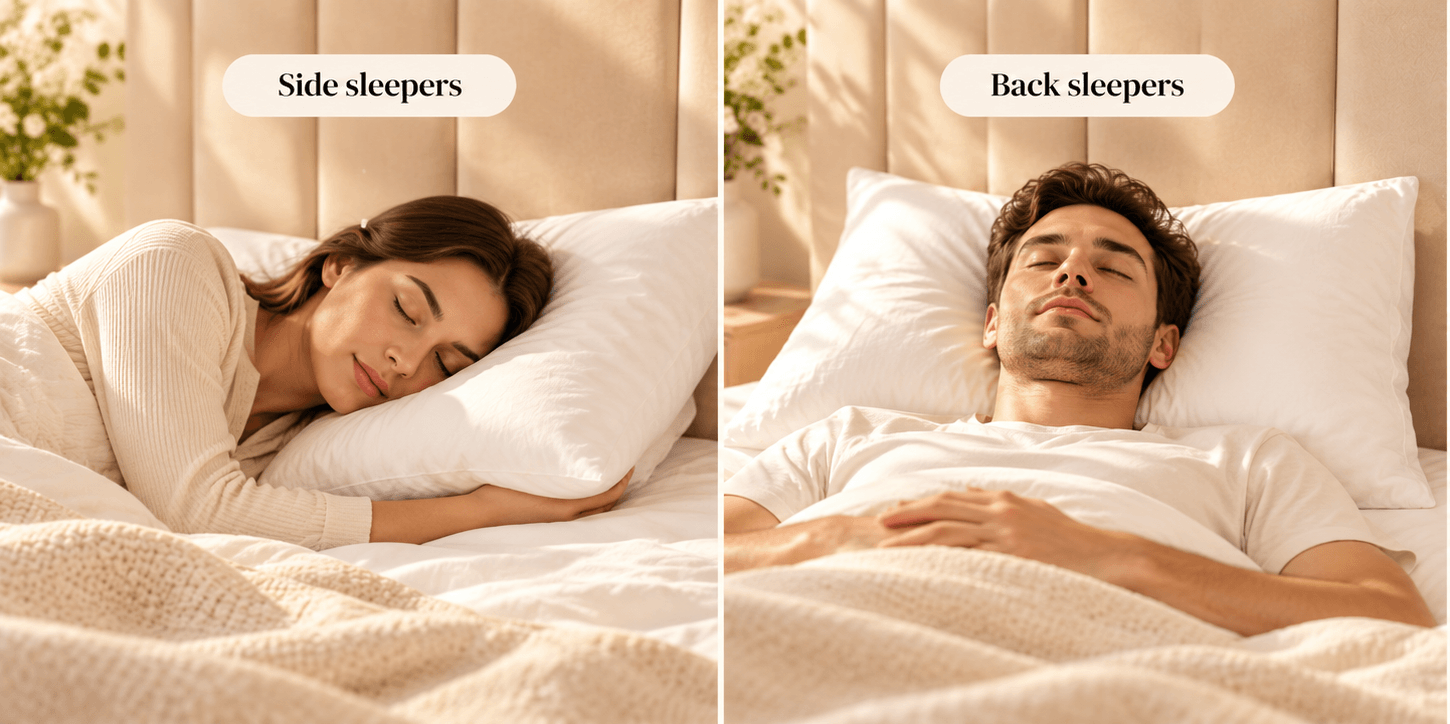
Your usual sleeping position is worth considering alongside pillow height, firmness, mattress feel and your own preferences.
Side sleepers may want to pay particular attention to pillow height. Shoulder width and how deeply your body settles into the mattress can influence how a particular height feels, so checking the actual measurements is more useful than assuming every contoured pillow will suit side sleeping.
Back sleepers may prefer a different height or shape from side sleepers. Some contoured designs include a lower central area, but the dimensions and feel of that area can vary considerably between products.
Shape, Height and Firmness Aren't the Same Thing
This is easy to overlook when comparing pillows online.
A pillow can have a noticeable contour and still feel relatively soft. Another can look simple but feel quite firm.
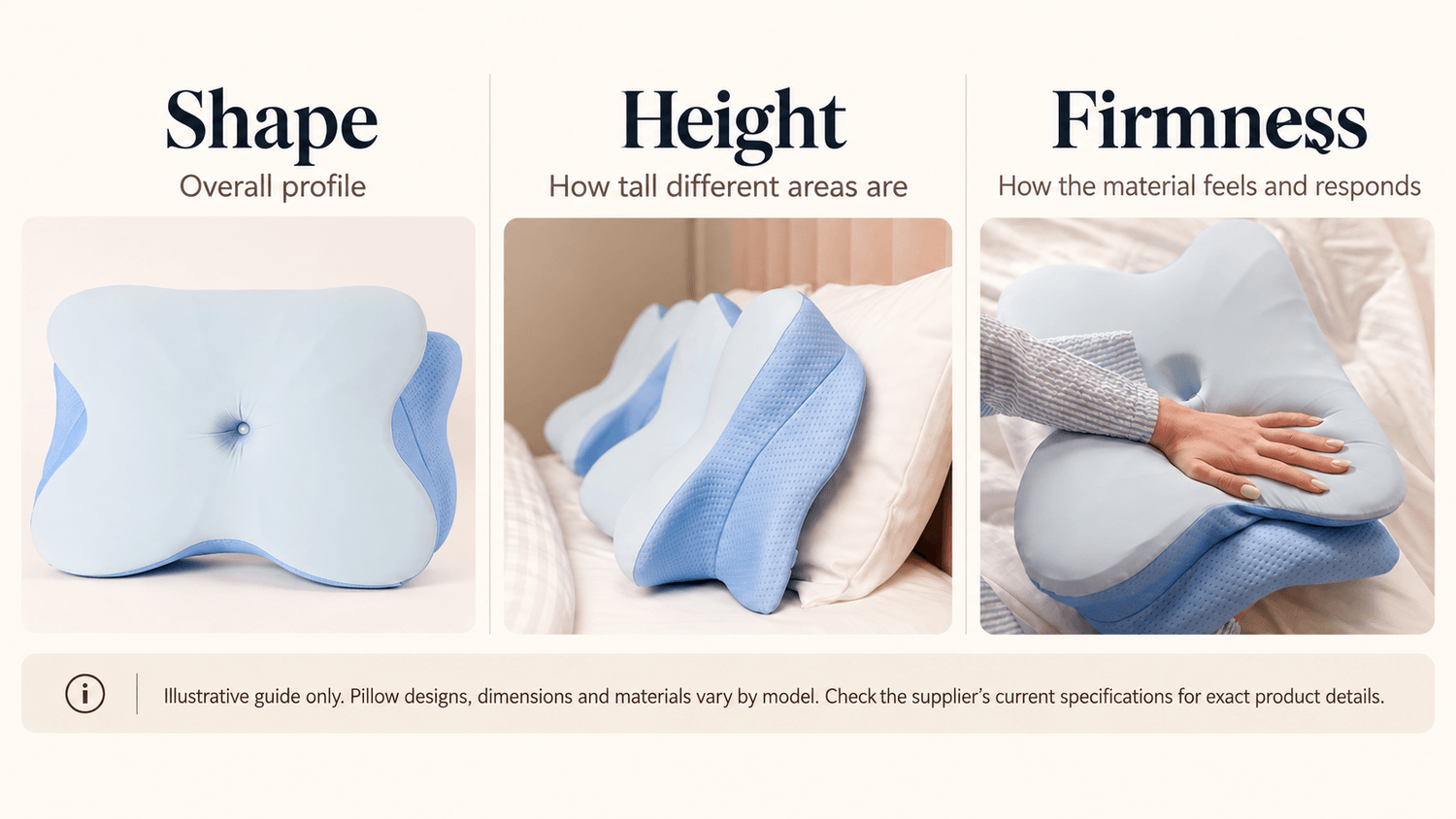
It helps to separate three things:
Shape is the overall profile of the pillow.
Height tells you how tall its different areas are.
Firmness describes how the material feels and responds when you lie on it.
Two pillows can look very similar in photographs but feel noticeably different because their dimensions, materials and construction aren't the same.
That's why shopping for the word “contour” alone doesn't tell you very much.
What Should You Check Before Choosing?
Start with the actual measurements rather than relying on product photographs.
Images can make a pillow appear larger, smaller, higher or shallower than it really is. Check its total length and width, along with the height of any raised and lower sections.
Then look at the material and construction.
Molded foam can feel more structured than loose filling, although firmness varies considerably from one product to another. Your mattress can also influence how a particular pillow height feels because different sleep surfaces allow the body to settle by different amounts.
Before buying, check:
Pillow and cover materials
Exact dimensions and edge heights
Firmness information, if provided
Whether the cover is removable and washable
Whether your preferred pillowcase will fit
Care instructions
Current shipping and delivery terms
Trial, return and refund conditions
These details usually tell you more about whether a pillow might suit you than a product label or promotional image alone.
Contour or Regular Pillow: Which Should You Choose?
A regular pillow makes sense if you enjoy flexibility and want the freedom to change its shape whenever you like.
A contoured pillow may be worth comparing if you prefer a more defined surface and like the idea of having the higher and lower areas already built into the design.
Think about what you're doing with your current pillow.
If it already works well, keep enjoying it.
If you repeatedly find yourself trying to create the same height or shape before you feel comfortable, looking at a contoured design may be a sensible next step.
Curious What a Contoured Design Looks Like in Practice?
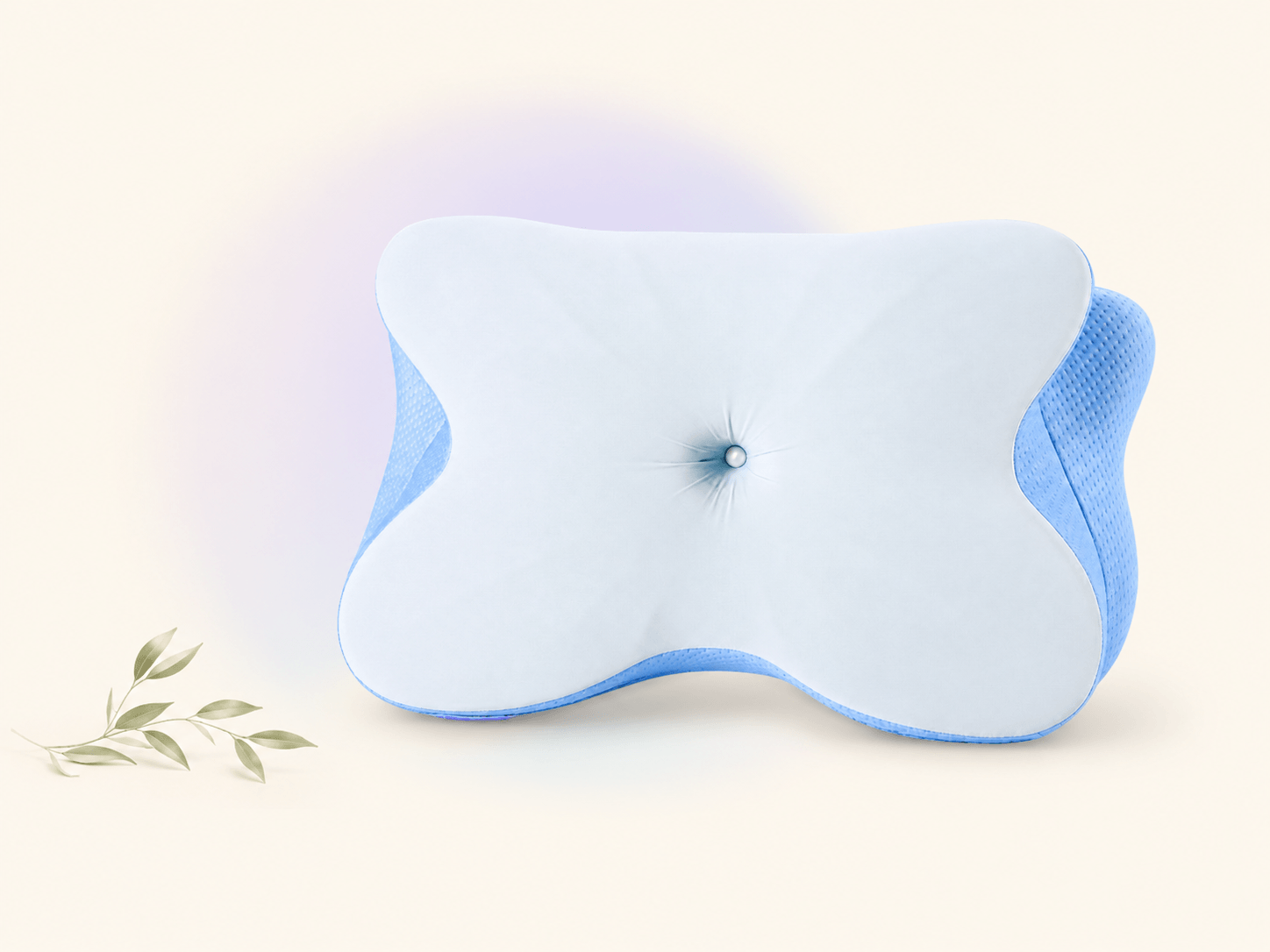
If a more defined shape sounds closer to what you prefer, the next step is simply to compare a real contoured design with what you're using now. Take a look at its shape, dimensions, materials and current purchase details before deciding.
Affiliate note: RoomCasa may earn a commission at no extra cost to you. You’ll continue to the seller’s website.
Frequently Asked Questions
Not automatically. A contour pillow has a pre-shaped profile, while a regular pillow often gives you more freedom to reshape it, depending on its filling and construction. Neither style is universally better. Which one suits you depends on the specific pillow, your preferences and the rest of your sleep setup.
No. Contour pillows come in different shapes and heights. Your usual sleeping position can help you decide which dimensions to compare, but it does not determine whether a particular pillow will suit your preferences.
Start with the actual measurements, especially the height of the raised and lower areas. Then compare the material, firmness, cover care, pillowcase fit and the seller’s current trial and return terms. Product photos alone are not enough to tell you how a pillow will feel or fit your preferences.
No. Materials and construction vary between products. Some contour pillows use memory foam, while others may use different foams or materials. Shape and firmness are also separate things, so check the product specifications rather than assuming a contour pillow will have a particular feel based on its shape alone.
No. “Ergonomic” is a broad design term, not a guarantee of comfort. The pillow’s actual shape, height, materials and firmness are more useful things to compare than the label alone.
It depends on the pillow’s dimensions and shape. Compare its measurements with your existing pillowcase and check the manufacturer’s recommendations before purchasing.
There is no fixed adjustment period. A more defined shape may feel different at first if you are used to a pillow that can be reshaped more freely. Whether you prefer that feel varies from person to person, so check the seller’s current trial and return terms before purchasing.
You lie down, close your eyes, and try to get comfortable. A few minutes later, you’re folding your pillow, pressing it into shape, or flipping it over again.
It’s a small thing, but it gets frustrating. If you keep adjusting your pillow, softness may not be the only thing worth comparing. The pillow’s shape and how much it changes while you use it can make a real difference to how it feels.
That’s where regular and contoured pillows differ. A regular pillow gives you more freedom to fluff and reshape it. A contoured pillow starts with higher and lower areas already built into the design.
RoomCasa is an independent home-comfort publisher. We may earn a commission if you purchase through links on this page, at no extra cost to you. We do not manufacture or sell the featured product.
A regular pillow may suit you better if you value a flexible shape that you can adjust and reshape. A contoured pillow may be worth considering if you prefer a more defined shape with higher and lower areas already built in. Neither design is automatically better. The better choice depends on the specific pillow and your preferences.
The Main Difference Is Built-In Shape
Most traditional pillows start with a relatively even shape. Depending on the filling, they can usually be adjusted, compressed or repositioned until the pillow feels comfortable to you.
Contoured pillows are different because more of the shape is decided in advance.
Many designs have raised edges and a lower central area. Others include different edge heights or additional shaping around the sides.
The practical difference is simple: with a traditional pillow, you create more of the shape yourself. With a contoured design, much of that shape is already there.
Overall shape: Usually even or softly rounded
Feel: Often more flexible
Height: Can change as filling moves or compresses
Adjustment: Commonly reshaped or repositioned
May appeal to you if: You value flexibility
Overall shape: Pre-shaped with defined areas
Feel: Usually more structured
Height: Often has more defined height areas
Adjustment: Generally follows its built-in profile
May appeal to you if: You prefer a more consistent shape
Who Might Prefer a Contoured Pillow?
A contoured design may appeal to you if you prefer knowing where the higher and lower areas of your pillow will be rather than creating those areas yourself.
Some models offer two different edge heights. Others use a lower central section or additional shaping around the sides. There isn't one universal contour, so the actual design matters.
The word ergonomic alone doesn't tell you whether a pillow will feel comfortable. It also doesn't tell you whether the pillow is too high, too low, too firm or simply the wrong shape for your preferences.
The actual dimensions, material, firmness and design are much more useful things to compare.
RoomCasa may earn a commission at no extra cost to you. You’ll continue to the seller’s website.
When a Regular Pillow May Be the Better Choice
There's nothing outdated about choosing a traditional pillow.
If you enjoy a flexible surface that you can reshape throughout the night, that freedom may be exactly what you prefer.
A regular pillow may also suit you better if you dislike the feeling of fixed high and low areas or regularly change how you position your pillow.
And if your current pillow already feels comfortable, there may be no good reason to replace it simply because a contoured design looks more advanced.
A different design is only an improvement if it suits you better.
How Does Sleep Position Affect the Choice?
Your usual sleeping position is worth considering alongside pillow height, firmness, mattress feel and your own preferences.
Side sleepers may want to pay particular attention to pillow height. Shoulder width and how deeply your body settles into the mattress can influence how a particular height feels, so checking the actual measurements is more useful than assuming every contoured pillow will suit side sleeping.
Back sleepers may prefer a different height or shape from side sleepers. Some contoured designs include a lower central area, but the dimensions and feel of that area can vary considerably between products.
Shape, Height and Firmness Aren't the Same Thing
This is easy to overlook when comparing pillows online.
A pillow can have a noticeable contour and still feel relatively soft. Another can look simple but feel quite firm.
It helps to separate three things:
Shape is the overall profile of the pillow.
Height tells you how tall its different areas are.
Firmness describes how the material feels and responds when you lie on it.
Two pillows can look very similar in photographs but feel noticeably different because their dimensions, materials and construction aren't the same.
That's why shopping for the word “contour” alone doesn't tell you very much.
What Should You Check Before Choosing?
Start with the actual measurements rather than relying on product photographs.
Images can make a pillow appear larger, smaller, higher or shallower than it really is. Check its total length and width, along with the height of any raised and lower sections.
Then look at the material and construction.
Molded foam can feel more structured than loose filling, although firmness varies considerably from one product to another. Your mattress can also influence how a particular pillow height feels because different sleep surfaces allow the body to settle by different amounts.
Before buying, check:
Pillow and cover materials
Exact dimensions and edge heights
Firmness information, if provided
Whether the cover is removable and washable
Whether your preferred pillowcase will fit
Care instructions
Current shipping and delivery terms
Trial, return and refund conditions
These details usually tell you more about whether a pillow might suit you than a product label or promotional image alone.
Contour or Regular Pillow: Which Should You Choose?
A regular pillow makes sense if you enjoy flexibility and want the freedom to change its shape whenever you like.
A contoured pillow may be worth comparing if you prefer a more defined surface and like the idea of having the higher and lower areas already built into the design.
Think about what you're doing with your current pillow.
If it already works well, keep enjoying it.
If you repeatedly find yourself trying to create the same height or shape before you feel comfortable, looking at a contoured design may be a sensible next step.
Curious What a Contoured Design Looks Like in Practice?
If a more defined shape sounds closer to what you prefer, the next step is simply to compare a real contoured design with what you're using now. Take a look at its shape, dimensions, materials and current purchase details before deciding.
RoomCasa may earn a commission at no extra cost to you. You’ll continue to the seller’s website.
Frequently Asked Questions
Not automatically. A contour pillow has a pre-shaped profile, while a regular pillow often gives you more freedom to reshape it, depending on its filling and construction. Neither style is universally better. Which one suits you depends on the specific pillow, your preferences and the rest of your sleep setup.
No. Contour pillows come in different shapes and heights. Your usual sleeping position can help you decide which dimensions to compare, but it does not determine whether a particular pillow will suit your preferences.
Start with the actual measurements, especially the height of the raised and lower areas. Then compare the material, firmness, cover care, pillowcase fit and the seller’s current trial and return terms. Product photos alone are not enough to tell you how a pillow will feel or fit your preferences.
No. Materials and construction vary between products. Some contour pillows use memory foam, while others may use different foams or materials. Shape and firmness are also separate things, so check the product specifications rather than assuming a contour pillow will have a particular feel based on its shape alone.
No. “Ergonomic” is a broad design term, not a guarantee of comfort. The pillow’s actual shape, height, materials and firmness are more useful things to compare than the label alone.
It depends on the pillow’s dimensions and shape. Compare its measurements with your existing pillowcase and check the manufacturer’s recommendations before purchasing.
There is no fixed adjustment period. A more defined shape may feel different at first if you are used to a pillow that can be reshaped more freely. Whether you prefer that feel varies from person to person, so check the seller’s current trial and return terms before purchasing.

Home | Privacy Policy | Terms & Conditions | Disclaimer & Affiliate Disclosure | Cookie Policy | Contact Us
RoomCasa is an independent home-comfort website. We may earn commissions through our links at no extra cost to you.
The Seller handles orders, delivery, returns, refunds, warranties and support.
Content is informational, not medical advice. Experiences may vary; visuals may be illustrative.
Check the seller’s website for current product details, prices, availability and policies.
© 2026 RoomCasa. All rights reserved.